
What Are the 5 Love Languages? Complete Guide for 2026
Understanding love languages could be the single most important thing you do for your relationship this year. Here is everything you need to know.
♥ Check Your Love Compatibility FreeHave you ever felt like you and your partner speak completely different languages when it comes to love? You shower them with compliments — but they seem to want more quality time. They constantly do things for you — but you just want to hear the words “I love you.” Sound familiar?
This is exactly what Dr. Gary Chapman discovered after years of marriage counselling — and it led to one of the most impactful relationship books ever written: The 5 Love Languages. In this complete guide we break down all five love languages, how to identify yours, and how understanding them can transform your relationship.
What Are the 5 Love Languages?
The concept of love languages was developed by Dr. Gary Chapman — a marriage counsellor and author who noticed that couples in conflict often had one thing in common: they were expressing love in ways their partner did not recognise or value. His 1992 book The 5 Love Languages has since sold over 20 million copies worldwide.
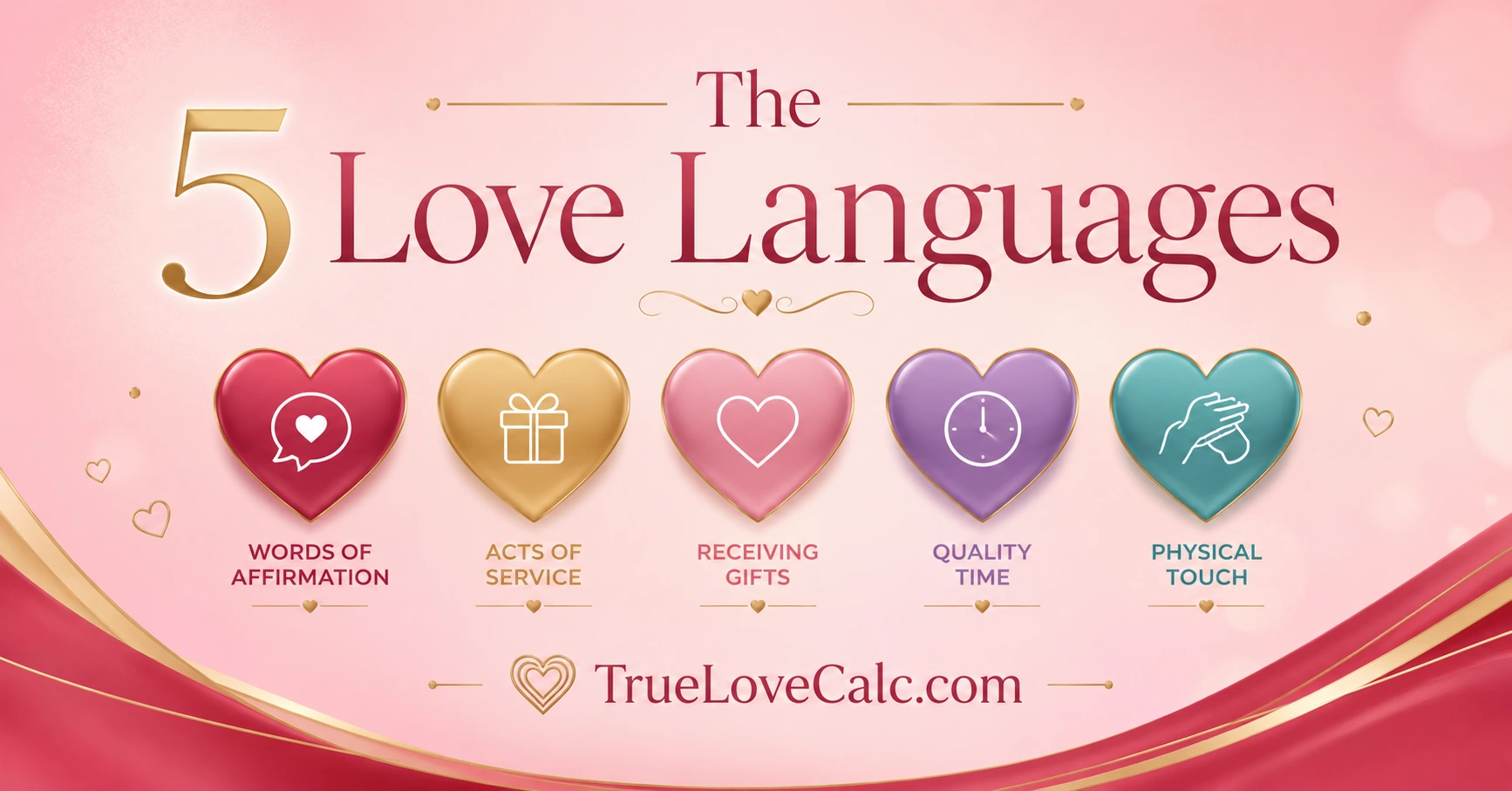
The five love languages are:
For people whose primary love language is Words of Affirmation, verbal expressions of love mean everything. Compliments, encouragement, “I love you”, and heartfelt appreciation make them feel deeply valued and secure. Criticism, on the other hand, cuts deeply — even when unintended.
- Saying “I love you” regularly and sincerely
- Leaving sweet notes or messages
- Complimenting their appearance, efforts, or achievements
- Expressing gratitude out loud
Quality Time is not just about being in the same room — it is about being fully present. People with this love language feel most loved when their partner gives them undivided attention. Phones away, eye contact maintained, and genuine engagement in conversation or shared activities.
- Going on dates with phones put away
- Taking walks and having deep conversations
- Cooking together or watching a favourite show
- Planning weekend trips or special activities
For people who value Receiving Gifts, it is never about the price tag — it is about the thought and effort behind the gesture. A small, meaningful gift tells them you were thinking of them. Forgetting important occasions like birthdays or anniversaries can feel particularly painful to this love language.
- Bringing home their favourite snack unexpectedly
- Thoughtful gifts that reflect their interests
- Remembering anniversaries with meaningful tokens
- Picking up flowers or small surprises just because
Actions speak louder than words for people with Acts of Service as their love language. Doing helpful things — making dinner, handling errands, fixing something around the house — communicates love more powerfully than any words could. Laziness or broken promises feel like a betrayal to this love language.
- Making breakfast in bed
- Taking care of chores without being asked
- Running errands when your partner is stressed
- Handling tasks they find difficult or stressful
Physical Touch is not just about intimacy — it is about connection through physical presence. Holding hands, hugging, a pat on the back, or simply sitting close together all communicate love powerfully to people with this love language. Physical neglect or distance can feel deeply painful and isolating.
- Holding hands while walking
- Long hugs when reuniting after time apart
- Gentle touches during conversation
- Cuddling while watching TV or reading
Discover Your Love Compatibility Score!
Enter your name and your partner’s name and get your instant Trust, Romance and Chemistry breakdown. 100% free!
♥ Calculate Love Percentage FreeHow to Identify Your Love Language
Not sure which love language is yours? Here are three powerful ways to figure it out:
1. Notice What You Complain About Most
Our complaints in relationships often reveal our unmet love language needs. If you frequently say things like “we never spend time together” — Quality Time is likely your primary language. If “you never say anything nice to me” — Words of Affirmation may be key.
2. Think About What You Request Most Often
What do you ask your partner for? More compliments? More help around the house? More physical affection? Your most frequent requests are usually a direct window into your primary love language.
3. Notice How You Naturally Express Love
We often express love in the way we most want to receive it. If you are always doing favours for your partner — Acts of Service may be your language. If you constantly compliment them — Words of Affirmation is likely your primary love language.
💡 Pro Tip: Most people have a primary and secondary love language. Understanding both gives you and your partner a much richer picture of how to love each other well. Take the official quiz at 5lovelanguages.com to find yours!
Love Language Compatibility — Which Combinations Work Best?
| Your Language | Partner’s Language | Compatibility |
|---|---|---|
| Words of Affirmation | Words of Affirmation | ✅ Natural Match |
| Quality Time | Physical Touch | ✅ Great Together |
| Acts of Service | Receiving Gifts | ⚡ Needs Effort |
| Words of Affirmation | Acts of Service | ⚡ Learn Each Other |
| Physical Touch | Words of Affirmation | ⚡ Bridges Needed |
| Quality Time | Acts of Service | ❗ Work Required |
Remember — no combination is impossible. Every pairing of love languages can thrive with awareness, open communication, and genuine willingness to love your partner in the way they need — not just the way that comes naturally to you.
Love Languages in Real Life — Common Scenarios
Scenario 1 — The Confused Couple
Sarah’s love language is Acts of Service. She cooks, cleans, and handles everything at home to show her partner she loves him. Her partner James’s love language is Words of Affirmation. He wants to hear “I love you” and receive compliments — not just see a clean house. Both feel unloved — even though both are trying hard. Once they understand each other’s language, everything changes.
Scenario 2 — The Gift Giver and the Time Seeker
Raj constantly buys his partner beautiful gifts — flowers, jewellery, surprises. But his partner Priya just wants him to put down his phone and spend a quiet evening together. His love language is Receiving Gifts — hers is Quality Time. Neither is wrong — they just speak different languages of love.
✨ Key Insight: The goal is not to find someone with the same love language — it is to understand your partner’s language and make the effort to speak it. That is what real love looks like in action.
Frequently Asked Questions
What are the 5 love languages?
The 5 love languages — developed by Dr. Gary Chapman — are Words of Affirmation, Quality Time, Receiving Gifts, Acts of Service, and Physical Touch. Each represents a different way people give and receive love most meaningfully.
How do I find out my love language?
Pay attention to what you complain about most in relationships, what you request from your partner most frequently, and how you naturally express love to others. You can also take the official love languages quiz at 5lovelanguages.com for a detailed result.
Can you have more than one love language?
Yes! Most people have a primary love language and one or two secondary ones. Understanding all of yours — and your partner’s — gives a much richer picture of how to connect and love each other well.
What if my partner and I have different love languages?
Different love languages are very common — and completely manageable! The key is awareness and effort. Once you understand your partner’s love language, you can consciously express love in ways they actually feel and appreciate. Many couples with different languages have deeply fulfilling relationships.
How does a love calculator relate to love languages?
While a love calculator measures name-based compatibility for fun, love languages go deeper — revealing how you and your partner give and receive love. Together they are a great starting point for understanding your relationship. Try our free love calculator at TrueLoveCalc.com to check your compatibility score!
Final Thoughts
Understanding the 5 love languages is one of the most practical and powerful things you can do for your relationship. It shifts the question from “why doesn’t my partner understand me?” to “how can I love my partner in the way they actually need?”
The goal is not perfection — it is awareness, effort, and genuine care. When two people commit to learning each other’s love language, something beautiful happens. Connection deepens, misunderstandings fade, and love grows in ways that feel truly seen and felt.
Check Your Love Compatibility Now!
Enter two names and get your instant love percentage — Trust, Romance and Chemistry breakdown included. 100% free, no sign-up needed!
♥ Try TrueLoveCalc Free Now